In 324 BCE, Chandragupta, ruler of the Mauryan Empire set out to conquer the weaker surrounding kingdoms to expand the territory of his people. As an explorer by nature, Chandragupta would travel to other lands to determine weather or not their defenses could put up much of a struggle. His military, while not extraordinary, devastated the primitive neighbors and avoided those that could not be won in a day. With cautious technique and determination the emperor spread his boundaries in every direction. With the aid of a Brahman statesman named Kautilya, who organized the political hierarchy of command, Chandragupta became the first to rule over a unified India.
Chandragupta governed the land as best he knew until the century's end, then entrusted the state to his son Bindusara. Nothing changed under the second generation of the Mauryan Empire. The territory continued to increase, as did the size of the military. Bindusara established a reign much the same as his fathers, controlling a larger kingdom than ever before known. As time went on however, the King became ill and speculation ran wild concerning which of his sons would inherit the throne. Tradition would choose the eldest son but many advisors became doubtful of his capabilities.
Oddly enough, soon after Bindusara addressed the public with his intent to stand down, a silent sibling rivalry commenced. For some strange reason Bindusara's sons became the victims of an assassin. One by one each man fell until only Ashoka stood tall. He was the one of many to evade a murderer. It is the belief of many historians that Ashoka and another of political influence thought it better if Bindusara were elevated of his decision.
Ashoka was anointed the new emperor in 274 BCE. Immediately he began instituting his law of oppression by administering capital punishment for even the slightest infractions. His cruel heart showed mercy upon no one. His people spoke so poorly of the new king's antics, word went straight to the top by way of the spies Ashoka had created to investigate public concern. Desiring to win rather than demand acclaim, Ashoka decided to surpass the efforts of his predecessors by brutally demolishing the kingdoms previously unscaved. The kingdom of Kalinga had with its borders, long kept the Mauryan Empire from accessing much of the Ganges river. This was enough of a reason to initiate an invasion. He led his military to eventual victory but in the process lost as well.
Standing along the front lines, Ashoka witnessed first hand the massacre of hundreds of thousands waged war on complete strangers. He knew so many had lost their lives simply because, he, the king, had ordered them to do so. Women became widows, children now orphans, Ashoka asked himself exactly what had his people won in war.
Great changes in policy fell on India following the war. Ashoka relinquished all intent in expanding his lands by military means. He had nothing to gain in battle and no reason to fear outside invasion. Instead he turned all his attention to the welfare of his subjects, and so began an era of peace and internal progression. By example Ashoka taught and persuaded his people to love and respect all living things. According to Dr. Munshi, "he insisted on the recognition of the sanctity of all human life".
The unnecessary slaughter or mutilation of animals was immediately abolished. Wildlife became protected by the king's law against sport hunting and branding. Limited hunting was permitted for consumption reasons but the overwhelming majority of Indians chose by their own free will to become vegetarians. Ashoka also showed mercy to those imprisoned, allowing them leave for the outside a day of the year. He attempted to raise the professional ambition of the common man by building universities for study and water transit and irrigation systems for trade and agriculture. He treated his subjects as equals regardless of their religion, politics and cast. The kingdoms surrounding his, so easily overthrown, were instead made to be well-respected allies.
Ashoka became an avid Buddhist practitioner, building 84,000 stupas across his empire housing the sacred relics of Gotama. He sent his family on religious pilgrimages to foreign lands and held massive assemblies so holy men from the world over could converse upon philosophies of the day. More than even Buddhism was Ashoka's deep involvement in the dharma. The dharma became the ultimate personal conduct of moral and ethical standard he desired his subjects to live by.
The Dharma
Ashoka saw the dharma as a righteous path showing the utmost respect for life. The dharma would bring harmony to India in the form of compassion. Serving as a guiding light, a voice of conscious that is the dharma can lead one to be a respectful, responsible human being. Edward D'cruz interprets the Ashokan dharma as a "religion to be used as a symbol of a new imperial unity and a cementing force to weld the diverse and heterogeneous elements of the empire". Ashoka's intent was to instigate "a practice of social behavior so broad and benevolent in its scope that no person, no matter what his religion, could reasonably object to it".
The dream was to unify a nation so large that its people of one region share little in common with those of another region. Diversity of religion, ethnicity and many cultural aspects held citizens against each other, creating a social block. The moral order of dharma could be agreed upon as beneficial and progressive by all who could understand its merits, in fact the dharma had long been a primary practice for members of Hinduism, Jainism and Buddhism. Dharma became the link between king and commoner, everyone lived by the same law of moral, religious and civil obligation toward each other.
Legacy of Ashoka
The reign of Ashoka Mauryan could easily have disappeared into history as the ages passed by, and would have, if hadn't he left behind a record of his trials. The testimony of this king was discovered in the form of magnificently sculpted pillars and boulders with the actions and teachings he wished to be published etched into the stone. What Ashoka left behind was the first written language in India since the ancient city of Harrapa. Rather than Sanskrit, the language used for inscription was the current spoken form called Prakrita. In translating these monuments, historians learn the bulk of what is assumed to have been true fact of the Mauryan Empire. It is difficult to determine whether or not some actual events ever happened but the etchings clearly depict how Ashoka wanted to be thought of and remembered.
The pillars, chiseled from stone, could weigh to fifty tons a piece. These would habitually be topped off with the sculpture of a lion or bull and carry the word of the king around its base. The transportation of each rock and pillar was a major ordeal, it may take several hundreds to hoist the artifact into place or onto a vessel capable of travel with such extreme weight. Each edict was sent to the outstretches of the empire so all could read, or be read to, the royal dharma. Most commonly the more elaborate works were sent to places of national importance and spiritual recognition, such as the birth place of Gotama.
Pillar Edict II when translated describes the "middle path", the way to enlightenment through dharma that the Buddha taught in his first sermon. Others such as Pillar Edict VII, quote Ashoka as remarking "I consider the promotion of my people's welfare my highest duty". Professor Tambiah, an anthropologist of the University of Chicago translates Rock Edict XI as reading, "There is no gift that can equal the gift of dharma, establishment of human relations in dharma, the distribution of wealth through dharma, or the kinship in dharma". Many of the etchings are complex and contradicting but those of the day got the message loud and clear. years preaching the dharma in order to unify his people. Just as he will never be forgotten, neither will his efforts to impose his great force of dharma. This is why the people of modern India have taken his image of "the wheel of dharma" from the sacred pillars and forever embedded it in the center of their national flag. It's no wonder in all his achievements, Ashoka, the Buddhist King, has inspired infinite cultures, multiple religions, and "One nation under god, with liberty and justice for all".
.....................................................................................................................
Lal Bahadur Shastri Biography
Born: October 2, 1904Died: January 10, 1966Achievements: Played a leading role in Indian freedom struggle; became Parliamentary Secretary of Pandit Govind Vallabh Pant, the then chief minister of Uttar Pradesh; became the Minister of Police and Transport in Pant's Cabinet; appointed as the Railways and Transport Minister in the Central Cabinet; also held the portfolios of Transport & Communications, Commerce and Industry, and Home Ministry in the Central cabinet; became Prime Minister of India in 1964; led India to victory over Pakistan in 1965 war.Lal Bahadur Shastri was the second Prime Minister of independent India. Though diminutive in physical stature he was a man of great courage and will. He successfully led country during the 1965 war with Pakistan. To mobilize the support of country during the war he coined the slogan of "Jai Jawan Jai Kisan". Lal Bahadur Sastri also played a key role in India's freedom struggle. He led his life with great simplicity and honesty and was a great source of inspiration for all the countrymen.Lal Bahadur Shastri was born on October 2, 1904 at Mughalsarai, Uttar Pradesh. His parents were Sharada Prasad and Ramdulari Devi. Lal Bahadur's surname was Srivastava but he dropped it as he did not want to indicate his caste. Lal Bahadur's father was a school teacher and later on he became a clerk in the Revenue Office at Allahabad. Though Sharada Prasad was poor, he lived a life of honesty and integrity. Lal Bahadur lost his father when he was only one. Ramdulari Devi raised Lal Bahadur and her two daughters at her father's house.There is a very famous incident regarding Lal Bahadur Shastri's childhood which took place when he was six years old. One day, while returning from school, Lal Bahadur and his friends went to an orchard that was on the way to home. Lal Bahadur Shastri was standing below while his friends climbed the trees to pluck mangoes. Meanwhile, the gardener came and caught hold of Lalbahadur Shastri. He scolded Lal Bahadur Shastri and started beating him. Lal Bahadur Shastri pleaded to gardener to leave him as he was orphan. Taking pity on Lal Bahadur, the gardener said, "Because you are an orphan, it is all the more important that you must learn better behavior." These words left a deep imprint on Lal Bahadur Shastri and he swore to behave better in the future.Lal Bahadur stayed at his grandfather's house till he was ten. By that time he had passed the sixth standard examination. He went to Varanasi for higher education. In 1921 when Mahatma Gandhi launched the non-cooperation movement against British Government, Lal Bahadur Shastri, was only seventeen years old. When Mahatma Gandhi gave a call to the youth to come out of Government schools and colleges, offices and courts and to sacrifice everything for the sake of freedom, Lal Bahadur came out of his school. Though his mother and relatives advised him not to do so, he was firm in his decision. Lal Bahadur was arrested during the Non-cooperation movement but as he was too young he was let off.After his release Lal Bahadur joined Kashi Vidya Peeth and for four years he studied philosophy. In 1926, Lal Bahadur earned the degree of "Shastri" After leaving Kashi Vidya Peeth, Lal Bahadur Shastri joined "The Servants of the People Society", which Lala Lajpat Rai had started in 1921. The aim of the Society was to train youths that were prepared to dedicate their lives in the service of the country. In 1927, Lal Bahadur Shastri married Lalitha Devi. The marriage ceremony was very simple and Shastriji took only a charkha (spinning wheel) and few yards of Khadi in dowry.In 1930, Gandhiji gave the call for Civil Disobedience Movement. Lal Bahadur Shastri joined the movement and encouraged people not to pay land revenue and taxes to the government. He was arrested and put in jail for two and a half years. In jail Shastriji became familiar with the works of western philosophers, revolutionaries and social reformers. Lal Bahadur Shastri had great self respect. Once when he was in prison, one of his daughters fell seriously ill. The officers agreed to release him out for a short time but on condition that he should agree in writing not to take part in the freedom 'movement during this period. Lal Bahadur did not wish to participate in the freedom movement during his temporary release from prison; but he said that he would not give it in writing. He thought that it was against his self-respect to give it in writing.After Second World War started in 1939, Congress launched "Individual Satyagraha" in 1940 to demand freedom. Lal Bahadur Shastri was arrested during Individual Satyagraha and released after one year. On August 8, 1942, Gandhiji gave the call for Quit India Movement. Lal Bahadur actively participated in the movement. He went underground but was later arrested. Lal Bahadur Shastri was released in 1945 along with other major leaders. He earned the praise of Pandit Govind Vallabh Pant by his hard work during the 1946 provincial elections. Lal Bahadur's administrative ability and organization skills came to the fore during this time. When Govind Vallabh Pant became the Chief Minister of Uttar Pradesh, he appointed Lal Bahadur Shastri as his Parliamentary Secretary. In 1947, Lal Bahadur Shastri became the Minister of Police and Transport in Pant's Cabinet.Lal Bahadur Sastri was the General Secretary of the Congress Party when the first general elections were held after India became Republic. Congress Party returned to power with a huge majority. In 1952, Jawahar Lal Nehru appointed Lal Bahadur Shastri as the Railways and Transport Minister in the Central Cabinet. Lal Bahadur Shastri's contribution in providing more facilities to travelers in third class compartments cannot be forgotten. He reduced the vast disparity between the first class and third class in the Railways. Lal Bahadur Shastri resigned from Railways in 1956, owning moral responsibility for a railway accident. Jawaharlal Nehru tried to persuade Shastriji but Lal Bahadur Shastri refused to budge from his stand. By his action Lal Bahadur Shastri set new standards of morality in public life.In the next general elections when Congress returned to power, Lal Bahadur Shastri became the Minister for Transport and Communications and later the Minister for Commerce and Industry. He became the Home Minister in 1961, after the death of Govind Vallabh Pant. In the 1962 India-China war Shastriji played a key role in maintaining internal security of the country. After the death of Jawaharlal Nehru in 1964, Lal Bahadur Shastri was unanimously elected as the Prime Minister of India. It was a difficult time and the country was facing huge challenges. There was food shortage in the country and on the security front Pakistan was creating problems. In 1965, Pakistan tried to take advantage of India's vulnerability and attacked India. Mild-mannered Lal Bahadur Shastri rose to the occasion and led the country ably. To enthuse soldiers and farmers he coined the slogan of "Jai Jawan, Jai Kisan". Pakistan lost the war and Shastriji's leadership was praised all over the world.In January 1966, to broker peace between India and Pakistan, Russia mediated a meeting between Lal Bahadur Shastri and Ayub Khan in Tashkent, Russia. India and Pakistan signed the joint declaration under Russian mediation. Under the treaty India agreed to return to Pakistan all the territories occupied by it during the war. The joint declaration was signed on January 10, 1966 and Lal Bahadur Shastri died of heart attack on the same night.
.................................................................................................................
LIFE OF BHAGAT SINGH
Family of Patriots
Bhagat Singh was born in a Sikh family of farmers in the village of Banga of Layalpur district of Punjab (now in Pakistan) on September 27th of 1907. His family stood for patriotism, reform, and freedom of the country. His grandfather Arjun Singh was drawn to Arya Samaj, a reformist movement of Hinduism (see the Arya Samaj web site) and took keen interest in proceedings of Indian National congress. Bhagat Singh's father Kishen Singh and uncle Ajit Singh were members of Ghadr Party founded in the U.S. in early years of this century to root out British rule in India. Both were jailed for alleged anti-British activities. Ajit Singh had 22 cases against him and forced to flee to Iran. Thereafter he went to Turkey, Austria, Germany and finally to Brazil to escape Black Water (Kalapani) punishment for his revolutionary activities in India.
The Jalianwala Bagh Massacre
Young Bhagat Singh was brought up in a politically charged state of Punjab which was left with a seething memory of Jalianwalla Massacre of more than 400 innocent lives and thousand injured. As a lad of 14, he went to this spot to collect the soil of the park of Jallianwalla (bagh) in his lunch box, sanctified by the blood of the innocent and kept as memento for life.
Bhagat Singh was studying in National College founded by Lala Lajpat Rai, a great revolutionary leader and reformist. To avoid early marriage (child marriages were very prevalent in India at the time), he ran away from home and became a member of the youth organization, Noujawan Bharat Sabha which had membership of all sects and religions. Where he met Chandra Shekhar Tiwari (Azad), B.K. Dutt and other revolutionaries. They used to print handouts and newspapers in secret and spread political awareness in India through Urdu, Punjabi and English. These were all banned activities in India at the time, punishable with imprisonment.
The Simon Commission, Murder of Lala Lajpat Rai and The Revenge
Anti-British feelings were spreading; Indians wanted some proper representation in running the administration of their country to which British reciprocated only on paper. Noticing that the restlessness was spreading, the British Government appointed a commission under the the leadership of Sir John Simon in 1928, to report on political happenings. There was no single Indian member in this commission and all the political parties decided to boycott the commission when it planned to visit major cities of India.
In Lahore, Lala Lajpat Rai and Pandit Madan Mohan Malavia decided to protest to the commission in open about their displeasure. It was a silent protest march, yet the police chief Mr. Scott had banned meeting or procession. Thousands had joined, without giving room for any untoward incident. Even then Mr. Scott beat Mr. Lala Lajpat Rai severely with a lathi (bamboo stick) on the head several times. Finally the leader succumbed to the injuries.
Bhagat Singh who was an eye witness to the morbid scene vowed to take revenge and with the help of Azad, Rajguru and Sukhadev plotted to kill Scott. Unfortunately he killed a junior officer, Mr. Sanders in a case of mistaken identity. He had to flee from Lahore to escape death punishment.
Bomb in the Assembly
Instead of finding the root cause for discontent of Indians, the British government took to more repressive measures. Under Defense of India Act, it gave more powers to police, to arrest persons to stop processions with suspicious movements and actions. The act brought in the council was defeated by one vote. Even then it was to be passed in the form of an ordinance in the interest of the public. No doubt the British were keen to arrest all leaders who opposed its arbitrary actions and Bhagat Singh who was in hiding all this while, volunteered to throw a bomb in the central assembly where the meeting to pass ordinance was being held. It was a carefully laid out plot, not to cause death or injury but to draw the attention of the government, that the modes of its suppression could no more be tolerated. It was agreed that Bhagat Singh and Batukeshwar Dutt would court arrest after throwing the bomb.
It was a forgone conclusion in 1929 April 8th at Delhi Central Assembly. Singh and Dutt threw handouts, and bombed in the corridor not to cause injury and courted arrest after shouting slogans Inquilab Zindabad (Long Live, Revolution!)
Meanwhile the killers of Sanders were identified with the treachery of Bhagat Singh's friends who became "Approvers." Bhagat Singh thought the court would be a proper venue to get publicity for the cause of freedom and did not want to disown the crime. But he gave a fiery statement giving reasons for the killing which was symbolic of the freedom struggle. He wanted to be shot like a soldier and not die at gallows . But, his plea was rejected and he was hanged on 23rd March 1931. He was 24.
Bhagat Singh became a legendary hero with the masses. Innumerable songs were composed about him and the youth throughout the country made him their ideal. He became a symbol of bravery and a martyr for free India..
................................................................................................................
Tajmahal - A Tribute to Beauty
Agra, once the capital of the Mughal Empire during the 16th and early 18th centuries, is one and a half hours by express train from New Delhi. Tourists from all over the world visit Agra not to see the ruins of the red sandstone fortress built by the Mughal emperors but to make a pilgrimage to Taj Mahal, India’s most famous architectural wonder, in a land where magnificent temples and edificies abound to remind visitors about the rich civilization of a country that is slowly but surely lifting itself into an industrialized society.
The postcard picture of Taj Mahal does not adequately convey the legend, the poetry and the romance that shroud what Rabindranath Tagore calls "a teardrop on the cheek of time". Taj Mahal means "Crown Palace" and is in fact the most well preserved and architecturally beautiful tomb in the world. It is best described by the English poet, Sir Edwin Arnold, as "Not a piece of architecture, as other buildings are, but the proud passions of an emperor’s love wrought in living stones." It is a celebration of woman built in marble and that’s the way to appreciate it.
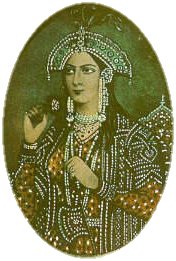
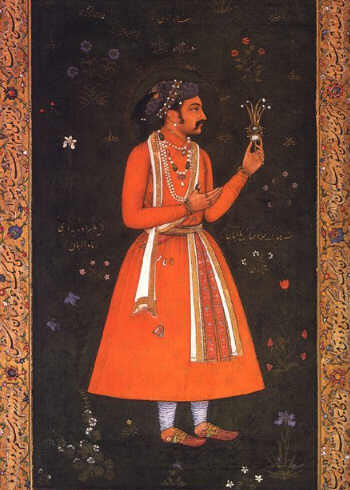
Taj Mahal stands on the bank of River Yamuna, which otherwise serves as a wide moat defending the Great Red Fort of Agra, the center of the Mughal emperors until they moved their capital to Delhi in 1637. It was built by the fifth Mughal emperor, Shah Jahan in 1631 in memory of his second wife, Mumtaz Mahal, a Muslim Persian princess. She died while accompanying her husband in Burhanpur in a campaign to crush a rebellion after giving birth to their 14th child. The death so crushed the emperor that all his hair and beard were said to have grown snow white in a few months.
When Mumtaz Mahal was still alive, she extracted four promises from the emperor: first, that he build the Taj; second, that he should marry again; third, that he be kind to their children; and fourth, that he visit the tomb on her death anniversary. He kept the first and second promises. Construction began in 1631 and was completed in 22 years. Twenty thousand people were deployed to work on it. The material was brought in from all over India and central Asia and it took a fleet of 1000 elephants to transport it to the site. It was designed by the Iranian architect Ustad Isa and it is best appreciated when the architecture and its adornments are linked to the passion that inspired it. It is a "symbol of eternal love".
The Taj rises on a high red sandstone base topped by a huge white marble terrace on which rests the famous dome flanked by four tapering minarets. Within the dome lies the jewel-inlaid cenotaph of the queen. So exquisite is the workmanship that the Taj has been described as "having been designed by giants and finished by jewellers". The only asymmetrical object in the Taj is the casket of the emperor which was built beside the queen’s as an afterthought. The emperor was deposed by his son and imprisoned in the Great Red Fort for eight years but was buried in the Taj. During his imprisonment, he had a view of the Taj.
As a tribute to a beautiful woman and as a monument for enduring love, the Taj reveals its subtleties when one visits it without being in a hurry. The rectangular base of Taj is in itself symbolic of the different sides from which to view a beautiful woman. The main gate is like a veil to a woman’s face which should be lifted delicately, gently and without haste on the wedding night. In indian tradition the veil is lifted gently to reveal the beauty of the bride. As one stands inside the main gate of Taj, his eyes are directed to an arch which frames the Taj.
The dome is made of white marble, but the tomb is set against the plain across the river and it is this background that works its magic of colours that, through their reflection, change the view of the Taj. The colours change at different hours of the day and during different seasons. Like a jewel, the Taj sparkles in moonlight when the semi-precious stones inlaid into the white marble on the main mausoleum catch the glow of the moon. The Taj is pinkish in the morning, milky white in the evening and golden when the moon shines. These changes, they say, depict the different moods of woman.
Different people have different views of the Taj but it would be enough to say that the Taj has a life of its own that leaps out of marble, provided you understand that it is a monument of love. As an architectural masterpiece, nothing could be added or substracted from it.
Would you like to see some beautiful pictures of Taj Mahal ?

1 comment:
India to prepare for all out war with China- by Kautilya Hegel
Director, Institute of War, Tuesday, November 14, 2006 8:00 PM, Washington DC. (1) MILITARILY DEFEND HINDU NEPAL: The Maoism and Maoists of Nepal and India presents greatest threat to Indian security. India should deploy troops in Nepal to restore Hindu Monarchy and Hindu-Buddhist Rule in Nepal. Nepali Maoists are enemies of India and India should fight Maoists in Nepal before they capture political power in Nepal. India should deploy retired Gurkha soldiers and Nepali citizens residents of India to take up arms to militarily defeat Maoists in Nepal. Foreign conspirators that profited by heroin production of Burma’s golden Triangle, has now made profits in Heroin opium Golden Crescent in Afghanistan. The Opium heroin Mafia seeks to make Nepal the new world center for the production of Opium and Heroin.
(2) MILITARILY SUPPORT THE BUDDHIST REVOLUTION IN TIBET: India should openly support the Tibetan Buddhists and all minorities in the hilly regions of China that account for 65 percent of landmass of China but only 15 percent of the population of China. India should promote Buddhism for the secession of Buddhists from Communist China to create a Buddhist China.
(3) MILITARILY SUPPORT BUDDHIST FALUN GONG: The Falun Gong represents Mahayana Buddhists and their supporters number over 100 million in China. India should provide political, military and economic support to Falun Gong activists in China to engineer the partition of China on grounds of Religion. Chinese Buddhists do not want to live under Communist Rule in China.
(4) MILITARY LESSONS OF KARGIL WAR: The Kargil War established the primacy of High Mountain warfare stating that the camouflaged sharp shooters entrenched high up in mountains can bring the vehicular traffic to stand still. The Kargil War doctrine would allow Tibetan revolutionaries to stop the vehicular traffic in Tibet and entire Mountainous regions of China that account for 65 percent of total landmass of China but only 15 percent of population of China.
(5) TRAITOR MENON BM KAUL: India lost the 1962 War with China because of the treason of Krishna Menon and General B.M. Kaul. Now India has a patriotic Sikh as a prime Minister and a Sikh as the Chief of Army in India. Sikh Prime Minister Manmohan Singh must prove that he is a patriotic India by leading India to victory to wipe out the sin of Congress Party that treason committed by Jawaharlal Nehru in 1962 did to India. Prime Minister Jawaharlal Nehru was a traitor and a foreign spy. Nehru gave Tibet to China because China had Netaji Subhas Chandra Bose as prisoner. It is moral imperative that India should prepare for an all out war with China and take the revenge of 1962 defeat.
(6) GENERAL MOBILIZATION OF INDIA: President should declare the State of emergency and order the compulsory military draft for the entire adult population between the age of 20 and 30 years. Every India must serve free for five years compulsory military service.
Professor Kautilya Hegel, Director- Election Watch, Inc.,
KautilyaHegel@yahoo.com,
http://360.yahoo.com/kautilyahegel;
http://360.yahoo.com/electionwatch
http://clearblogs.com/kautilyahegel
http://indiatalking.com/blog/kautilyahegel
Post a Comment